
Immuno-Oncology: Dendritic Cell Vaccine for Bladder Cancer
If you have been told you have early-stage bladder cancer, BCG is probably the treatment being offered. It is a liquid put into your bladder through a catheter, it uses your own immune system rather than chemotherapy, and it is the most thoroughly tested bladder-preserving treatment that exists.
Dendritic cell vaccines for bladder cancer are a different idea entirely: immune cells are taken from your blood, trained in a laboratory, and given back to you. The concept is legitimate and actively researched. But in bladder cancer specifically, it has almost no clinical trial data behind it, no regulatory approval in any country, and no published survival figures. Where it is offered to bladder cancer patients today, it is usually sold privately for a five-figure sum.
That difference — decades of randomized evidence on one side, an unfinished research programs on the other — is the single most important thing to understand before comparing them.
What BCG actually is
BCG stands for Bacillus Calmette-Guérin. It is a deliberately weakened relative of the bacterium that causes tuberculosis in cattle, developed as a TB vaccine in the early twentieth century. Urologists noticed something unexpected decades ago: when this bacterium is placed inside a bladder, the immune reaction it triggers also clears away microscopic cancer cells.
That is worth restating, because patients often assume BCG is a form of chemotherapy. It is not. BCG does not poison tumour cells. It creates a controlled, intentional inflammation in the bladder wall. Immune cells rush to the site, and while they are dealing with the bacteria, they also recognise and destroy remaining cancer cells that surgery could not see.
This makes BCG one of the oldest working immunotherapies in cancer medicine — in use long before the modern checkpoint inhibitors that get most of the attention today.
What a BCG appointment is like
Knowing the practical shape of treatment tends to reduce anxiety more than knowing the biology.
Before you go in. You will usually be asked to limit fluids for a few hours, so your bladder does not fill and force you to empty it early. Your urine will be checked — an active infection means the appointment is postponed, not cancelled.
The instillation. A thin, soft catheter is passed into the bladder and the BCG solution flows in. This takes a couple of minutes. It is uncomfortable rather than painful for most people. The catheter is then removed.
Holding it. You keep the solution in your bladder for roughly two hours, ideally shifting position now and then so it reaches the whole bladder lining. Many clinics let you wait at home if you live nearby.
Afterwards. You empty your bladder normally. For the first six hours you will be asked to sit to urinate and to disinfect the toilet afterwards, because live bacteria are present in the urine. Drinking well for the rest of the day helps flush the bladder.
The schedule. A first course, called induction, is six sessions once a week. If it works, maintenance follows: short blocks of three weekly instillations at spaced intervals, continuing for one to three years depending on your risk group. It is a long relationship with your urology department, not a one-off procedure.
When BCG is the right option
BCG is only used for non-muscle-invasive bladder cancer (NMIBC) — cancer that sits in the bladder lining or the layer immediately beneath it, and has not grown into the muscle wall. Roughly three out of four bladder cancers are diagnosed at this stage. If your cancer has reached the muscle or spread further, BCG is not the treatment; surgery, radiotherapy or systemic drugs are.
Within non-muscle-invasive disease, the decision follows your risk category, which your team calculates from tumour stage, grade, size, number of tumours, whether carcinoma in situ is present, and whether the cancer has come back before.
Low risk. Regular cystoscopy surveillance, often with a single chemotherapy instillation right after the initial surgery. BCG is not needed and its side effects are not justified.
Intermediate risk. A genuine choice. BCG and intravesical chemotherapy such as mitomycin or gemcitabine both work; chemotherapy is gentler, BCG is somewhat more effective at preventing recurrence. Preference and tolerance matter here.
High and very high risk. This includes high-grade T1 tumours and carcinoma in situ. BCG with maintenance is the standard recommendation across European, American and international guidelines. The realistic alternative is removing the bladder entirely.
That last point deserves weight. Removing the bladder is a major operation with a meaningful rate of serious complications and a permanent change to how you urinate for the rest of your life. BCG exists to let a large proportion of high-risk patients keep their bladder. When patients ask whether the weekly appointments are worth the trouble, that is the comparison being made — not BCG versus nothing.
When BCG cannot be given
BCG is withheld or delayed if you have a symptomatic urinary infection, visible blood in your urine, a suppressed immune system, active tuberculosis, or if the bladder was perforated or the catheter placement was traumatic. It is also not given in the first weeks after tumour resection, while the bladder wall is still healing, because live bacteria entering the bloodstream through raw tissue is exactly the scenario to avoid.
Side effects: what is normal and what is not
BCG works by causing inflammation, so some reaction is expected. A completely symptom-free course is not the goal.
Common and expected. Burning on urination, needing the toilet more often and more urgently, and traces of blood in the urine. Flu-like feelings — aching, tiredness, mild chills — affect roughly a third of patients. A mild temperature is frequent. Symptoms typically begin four to six hours after the instillation and settle within one to three days. They often become more noticeable after the third or fourth session rather than at the start.
Manageable with adjustment. If symptoms are heavy, your urologist can pause the schedule, reduce the dose, or add symptomatic medication. Pausing is common and does not mean the treatment has failed.
Uncommon but serious. A small percentage of patients develop persistent fever, inflammation of the prostate or testicles, or — rarely, in well under one percent — a systemic BCG infection that needs anti-tuberculosis medication. Around one in twelve patients stops treatment early because of side effects.
Call your clinic the same day if: your temperature stays above 38 °C, you have shaking chills, you feel genuinely unwell rather than merely uncomfortable, or symptoms drag on beyond two days. These are the signals for pausing and investigating, and they are treatable when caught early.
What BCG achieves — and what it does not
Be careful with survival statistics for this disease, because they are easy to misread. Overall survival in non-muscle-invasive bladder cancer is high — most patients do not die of it. That figure reflects the stage at diagnosis, not the power of any single drug.
What BCG demonstrably does is reduce recurrence and reduce progression to muscle-invasive disease. In high-risk patients, most published series find that somewhere between a third and two-thirds remain recurrence-free at five years, and the large majority have not progressed to muscle invasion. It does not eliminate the risk, which is why lifelong cystoscopy surveillance continues either way.
Recurrence during or after BCG is common enough to have its own vocabulary — BCG-refractory, BCG-relapsing, BCG-unresponsive — and its own set of next-line options, which have expanded considerably in recent years. Recurrence is a setback, not a dead end.
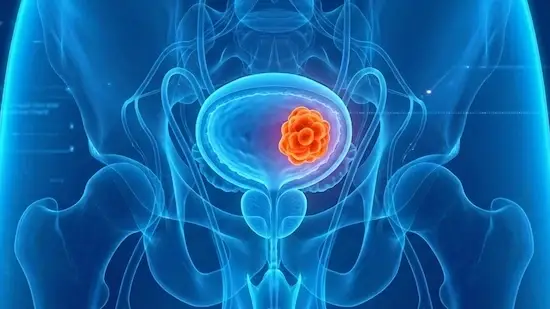
Dendritic cell vaccines: the concept
Dendritic cells are the immune system’s briefing officers. They pick up fragments of abnormal cells, carry them to the lymph nodes, and show them to T cells, effectively issuing a description of the target.
A dendritic cell vaccine tries to run that process deliberately. Immune cells are collected from your blood, matured into dendritic cells in a laboratory, loaded with tumour material or specific tumour proteins, and returned to you as a series of injections. The hope is a systemic, tumour-specific immune response with very few side effects.
This is a serious scientific field. One dendritic cell product has cleared regulatory approval anywhere in the world — in metastatic prostate cancer, where it produced a survival gain measured in months. In glioblastoma, melanoma, pancreatic and liver cancer, trials are ongoing.
In bladder cancer, the picture is close to empty. There is early-phase work in which bladder cancer patients were included alongside other tumour types, in cohorts of a few dozen people, measuring safety and immune response rather than survival. There is no phase III programme. There is no approval in Germany, the EU, the US, or anywhere else. There are no published recurrence, progression or survival figures that can be placed next to the BCG numbers above.
Side-by-side comparison
Reading the comparison honestly
A table like the one above can create a false impression of two comparable choices. It is not that. One column describes a treatment tested against alternatives in randomised trials; the other describes a treatment concept that has not yet been tested in this disease.
Two things follow from that.
First, “fewer side effects” is not an advantage until efficacy is established. A treatment that does nothing also has excellent tolerability. The gentleness of dendritic cell vaccination only becomes a selling point once it is shown to prevent recurrence, and in bladder cancer that has not been shown.
Second, be alert to how these therapies are marketed. Germany has a well-known private clinic sector offering individualised cell therapies to patients from around the world. The clinical claims on these websites — dramatic survival improvements, high cure rates — do not correspond to published bladder cancer data, because published bladder cancer data does not exist. If a clinic is asking you to pay tens of thousands of euros out of pocket for a bladder cancer treatment, the reason your insurer will not cover it is that it has not been shown to work for your disease.
If you want access to genuinely novel treatment, the better route is a clinical trial: the drug is provided, monitoring is intensive, you pay nothing, and your outcome is recorded and contributes to knowledge.
What is genuinely new in bladder cancer
Several approaches with real trial data are moving into practice or are recruiting patients in Germany and across Europe:
- Checkpoint inhibitors combined with BCG for patients starting treatment, tested in large randomised trials
- Slow-release drug devices placed inside the bladder, delivering chemotherapy continuously over weeks instead of in short instillations
- Immune-stimulating agents given alongside BCG for patients whose disease returned
- Gene therapy and oncolytic virus instillations for BCG-unresponsive disease
- Sequential gemcitabine and docetaxel, an inexpensive and increasingly used combination
Ask your urologist which of these your hospital offers or participates in. University centres and certified bladder cancer centres are the usual points of access.
Priming, Boosting, and Clonal Expansion
The first dose is the priming dose. Your loaded dendritic cells migrate to the draining lymph node and present tumor antigens to naïve CD4+ and CD8+ T cells. Only a very small number of T cells in your body happen to carry a receptor that fits your tumor’s antigens — perhaps one in a hundred thousand.
Priming finds them and switches them on. Clonal expansion then takes roughly 7–14 days, and after that, without further stimulation, most of those cells contract and die. That is normal immunology, not failure.
The second, third and fourth doses are boosting doses, typically spaced two to four weeks apart. Each boost does something the first dose cannot:
Expands the clone size — you go from thousands of tumor-specific T cells to millions.
Drives affinity maturation and epitope spreading — the response broadens to additional tumor antigens, which matters enormously in a heterogeneous tumor like high-grade serous bladder cancer.
- Overcomes the suppressive microenvironment — repeated stimulation counteracts the regulatory T cells and myeloid-derived suppressor cells that bladder tumors deploy.
- Shifts the population toward memory — this is the decisive one.
How much is the cost for Dendritic Cell Vaccine for Bladder Cancer Program in Germany
The honest answer is that it depends on your situation. Bladder Cancer is not treated with a single fixed protocol, so the cost reflects what your individual case actually requires — the combination of therapies involved, the number of treatment cycles, the length of your stay, and the supportive care around them.
For most patients, a complete program ranges from €58K to €180K. Where your case falls within that range depends on factors such as the stage of your disease, whether you have had surgery, the treatments you have already received, and how your therapy plan is structured.
Before we can give you a meaningful figure, we need to review your medical reports.
Your imaging and treatment history tell us what is realistic and appropriate for your situation — and just as importantly, whether this therapy is a sensible option for you at all. We would rather tell you honestly that a program fits your case than quote a number that does not reflect your reality.
Once we have reviewed your reports, we prepare a personalized program evaluation. This sets out a clear treatment plan and a transparent cost estimate for your specific case, so you can make an informed decision with no surprises.
Frequently asked Questions
Any query/confusion? Here’s a list of frequently-asked questions and their answers that might help.
Is BCG chemotherapy?
No. BCG is an immunotherapy. It uses a weakened bacterium to provoke an immune response inside the bladder; it does not contain a cytotoxic drug.
How long does BCG treatment last?
Six weekly sessions to begin with, then maintenance blocks spread across one to three years, depending on your risk group and how well you tolerate it.
Does BCG cure bladder cancer?
It substantially lowers the chance of recurrence and of progression to muscle-invasive disease, allowing most high-risk patients to keep their bladder. It does not remove the need for ongoing cystoscopy surveillance.
Can a dendritic cell vaccine replace BCG?
Not on current evidence. No dendritic cell vaccine is approved for bladder cancer in any country, and none has published recurrence or survival results in this disease.
What happens if BCG stops working?
Then you seek Dendritic Cell Vaccine for Bladder Cancer in Germany.
How soon can I start, and how long does it take?
Normally within 10-14 days.
Testimonials

Prostate cancer

Adenocarcinoma (Skin)
Ovarian cancer
Pancreatic cancer
Our Experts of Cancer Immunotherapy in Germany

Prof. Dr. med. van Gool
Van Gool, MD, PhD, is a specialist in pediatric and adult hematology-oncology with a focus on brain tumors but also center in general.
“Since every tumor is different, the best results are achieved by using the patient’s own dendritic cells to attack the unique set of tumor cells.”

Dr. rer. nat. Nesselhut
Dr. Nesselhut is specialist in Immunotherapies and board certified physician in immunotherapy. His focus is at oncologically immunotherapy and DCV.
“We are focused on the human being in its entirety.”

Dr. med. Stücker
Dr. Stücker is count among the renowned scientists and physicians in the fields of immuno-oncology and translational oncology. He is considered pioneer of personalized cancer therapies.
“We use our expertise to extend the lives of cancer patients and offer them gentle treatment.”

Find a clinic for Dendritic Cell Vaccine in Germany
Germany is renowned for its advanced medical treatments and state-of-the-art facilities, making it a top destination for patients seeking cutting-edge therapies like comprehensive immunotherapy. One of the leading organizations in this field is GermanyHealth.
Our offer includes all from A to Z including transportation if you need it. Hence, for a remote second opinion, book here. However, if you have high demand, we recommend booking our VIP Service Germany.
Also our patient service provides comprehensive support for international patients seeking treatment BCG in Germany.
- Expert Consultation and Treatment Planning: We provide expert medical consultation to determine the most appropriate treatment plan for each patient with bladder cancer to get the appropriate dendritic cell therapy.
- Hospital and Clinic Coordination: We arrange treatment at some of Germany’s best hospitals and clinics specializing in the treatment of bladder cancer with modern Immunotherapies. Of course, you receive our onside service as well.
- Travel and Accommodation Assistance: We assist with travel arrangements, visa applications, transportation in Germany, and accommodation, ensuring a smooth and stress-free experience.
- Ongoing Patient Support: We offer continuous support throughout the treatment process, including follow-up care and communication with the clinic. Hence, we provide follow up service after you have left back home.
Get your free case review to see if you are a candidate